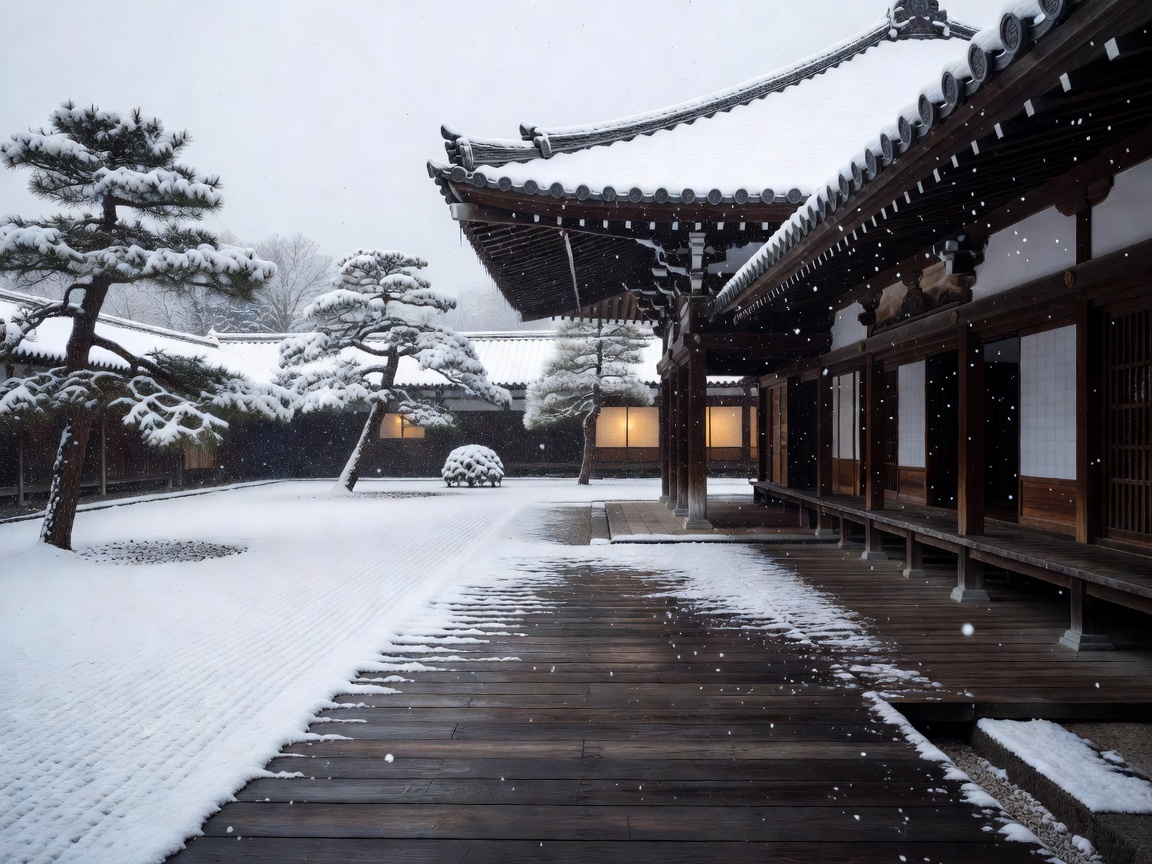
Experience Kyoto in Quiet Contemplation
While spring cherry blossoms and autumn maples draw millions of tourists to Kyoto, winter reveals the ancient capital's true meditative essence. The centuries-old wooden shrines, moss gardens, and cedar groves return to a state of profound stillness.
Key Winter Highlights in Kyoto
1. Kinkaku-ji (The Golden Pavilion) in Snow
Seeing the two upper floors of Kinkaku-ji covered in gold leaf reflected in the icy Mirror Pond (Kyōko-chi) dusted with white snow is considered by Japanese poets to be the pinnacle of winter aesthetic (Wabi-Sabi).
2. Mountain Onsen Experience in Kurama & Kibune
A scenic 30-minute train ride north of Kyoto on the Eizan Railway brings you into the snowy cedar valleys of Mount Kurama. Relax in an outdoor hot spring (Rotenburo) surrounded by snow-covered Japanese pines and natural steam.
💡 Traditional Winter Culinary Culture: Yudofu
In the historic Nanzen-ji temple quarter, specialty restaurants serve Yudofu—fresh, silky Kyoto tofu gently simmered with kombu seaweed in iron pots at your table, paired with grated ginger, scallions, and soy dipping sauce.
3. Arashiyama Bamboo Grove Without Crowds
Visiting Arashiyama in early February mornings allows you to walk through the iconic soaring bamboo forest and hear the unique natural rustling of bamboo stalks knocking in the cold mountain breeze—a sound impossible to appreciate during busy summer afternoons.
Transportation & Practical Tips
- IC Cards: Use ICOCA or Suica cards for seamless subway and city bus travel across Kyoto.
- Temple Etiquette: Many wooden temple interiors require removing outdoor footwear. Bring thick wool socks, as historic tatami and wooden floors can be quite cold.